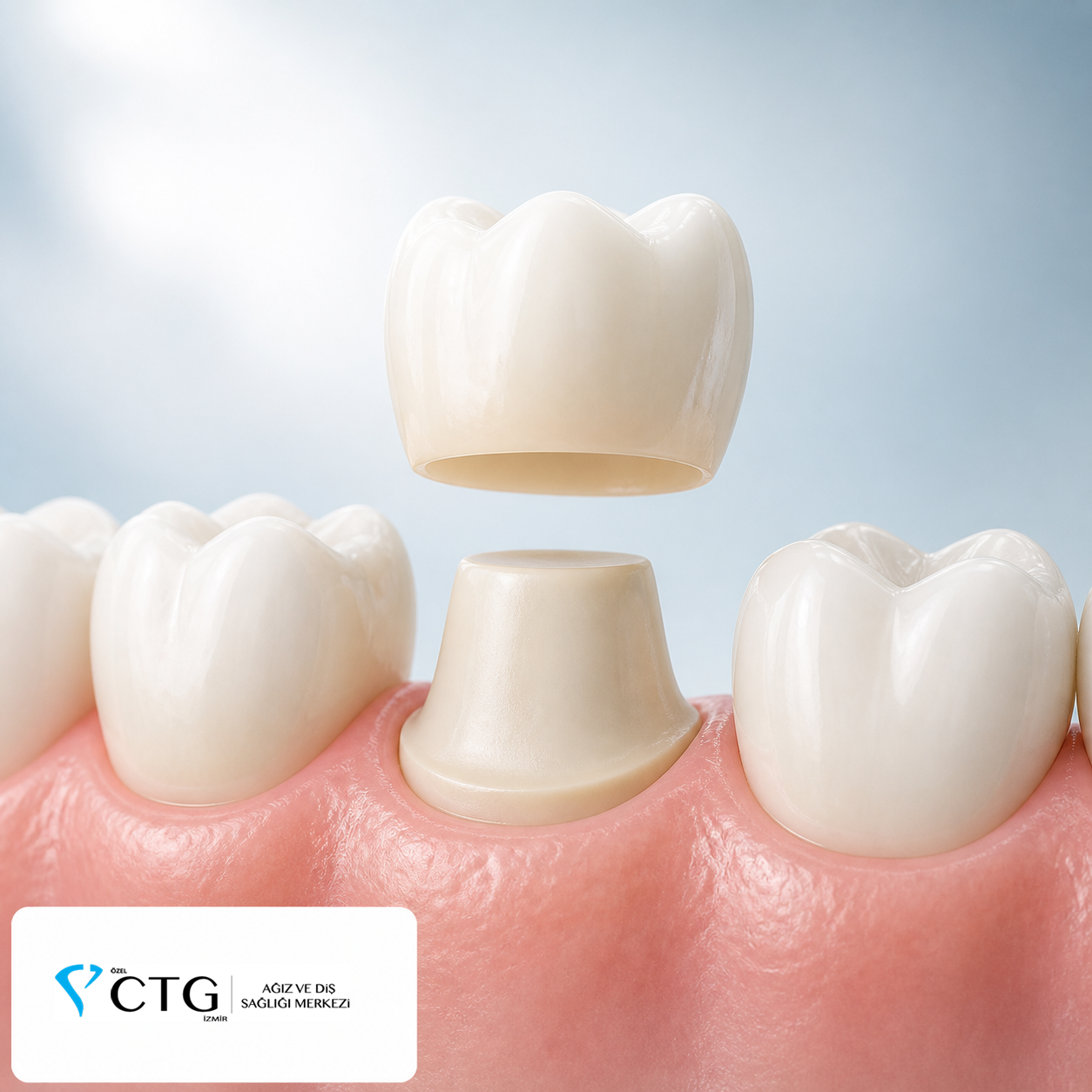
Dental Crowns
A more aesthetic smile with dental restorations.
What is a Dental Crown?
Dental crowns and veneers can be planned with metal-supported or metal-free materials. Zirconia, full porcelain and laminate veneers are metal-free options that can provide a more natural appearance and higher light transmission than metal-supported restorations.
When are Dental Crowns Used?
Crowns are often used for aesthetic improvement, correction of tooth form and color, restoration of teeth with significant substance loss, renewal of old restorations, bridge planning for missing teeth, and restorations supported by implants.
How is a Crown Applied?
The tooth surface is prepared by reducing it by a small amount. Gum health is evaluated and, when ready, impressions are taken with conventional or digital methods. A restoration matching the selected material and tooth shade is produced in the laboratory. The crown is then bonded to the tooth with suitable dental cements.
What are the Advantages of Different Materials?
Metal-supported porcelain crowns are durable and economical, but their light transmission and gum compatibility are more limited. Zirconia crowns are tissue-friendly, strong and visually closer to natural teeth. Full porcelain restorations, including E-Max, offer high aesthetics and light transmission, especially in the anterior region. Laminate veneers are thin porcelain restorations applied to the front surface of teeth with minimal preparation in suitable cases.
How Long Can Crowns Be Used?
With regular checkups and careful oral hygiene, crowns can be used for many years. Longevity depends on bite forces, tooth grinding, oral care, restoration material and the health of the supporting tooth and gums.