


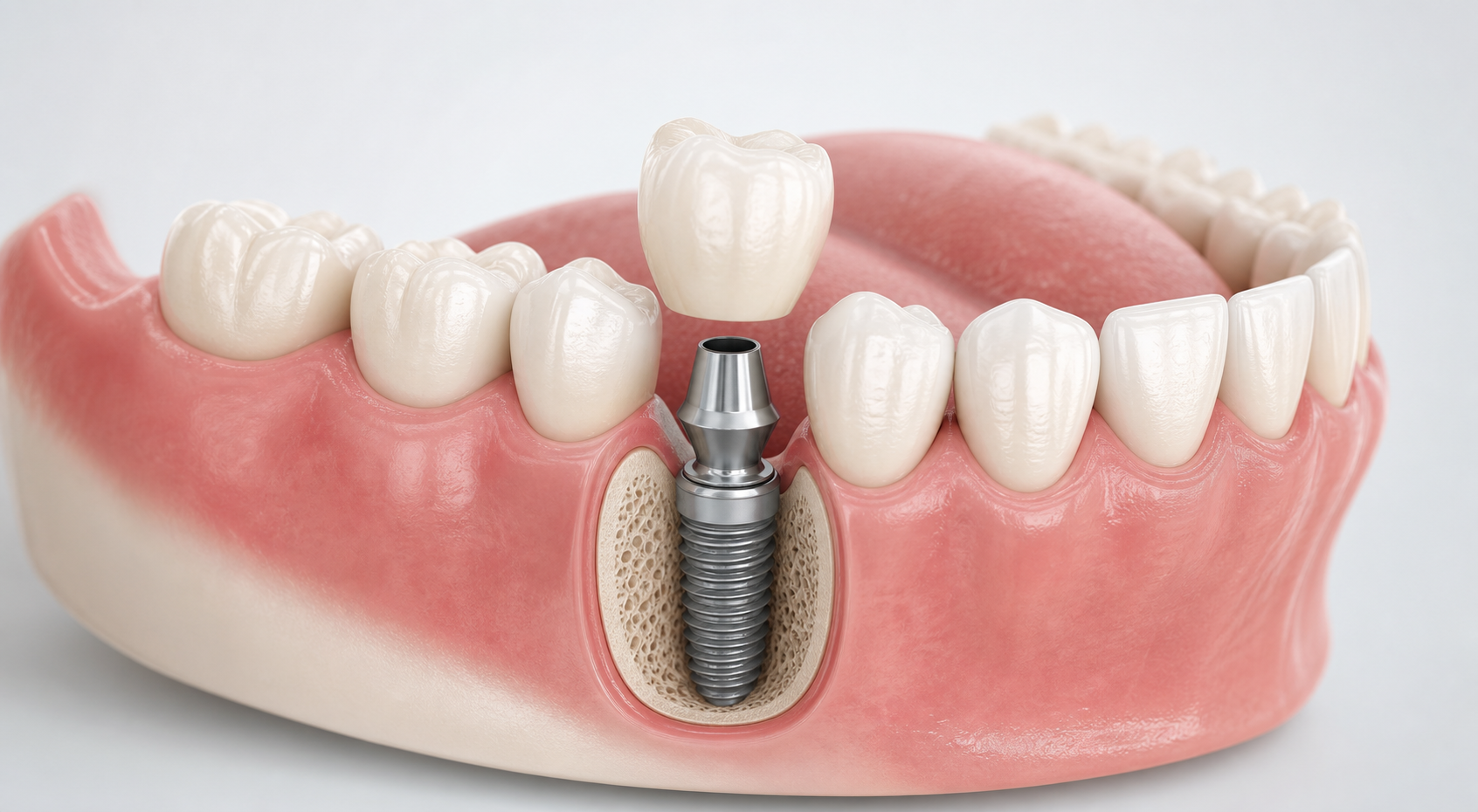
A dental implant is a titanium material that acts as a tooth root and is placed into the jawbone. The prosthesis or crown prepared on top supports chewing and aesthetic function in the missing tooth area.
How is an implant placed in the jawbone?
After examination, X-rays and, when necessary, tomographic evaluation, the position, diameter and length of the implant are planned. The procedure may be performed with local anesthesia, sedation or general anesthesia in suitable cases. After placement, biological integration with bone begins.
What can happen when a tooth is missing?
If a missing tooth space remains empty for a long time, neighboring teeth may shift, the opposing tooth may elongate, chewing balance may be disturbed and aesthetic problems may develop. The method for closing the space should be planned with the dentist.
The importance of bone and gum tissue
Bone density and gum health are important for implant success. If bone volume is insufficient, supportive procedures such as bone grafting may be needed. Gum problems should be treated before implant planning.
Implant-supported prosthesis
After bone integration, the prosthetic phase begins. Abutments and custom prostheses are planned to achieve function and appearance close to natural teeth.