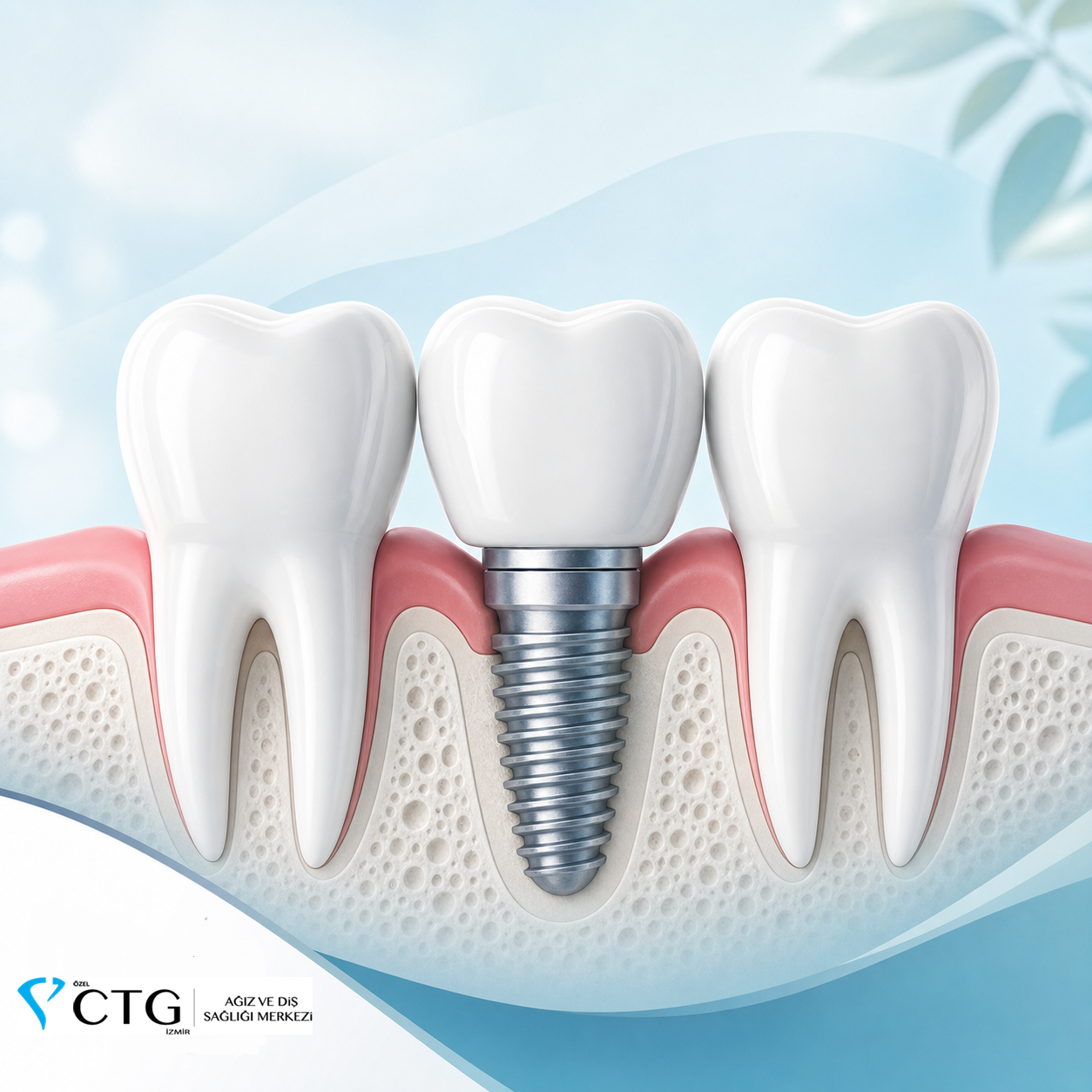
Dental Implant
A long-term, natural-feeling solution for missing teeth.
What is a Dental Implant?
An implant is a biocompatible material designed to replace the function of a missing body structure. A dental implant is a titanium screw-like material that acts as an artificial tooth root.
How is a Dental Implant Placed?
Before implant treatment, the extraction area or existing gap must be evaluated, bone density should be sufficient, and gum problems should be treated. After X-rays and, when necessary, tomography, the dentist plans the implant position in the jawbone and selects the appropriate implant type and size.
Depending on the patient's needs and the dentist's recommendation, the procedure may be performed under local anesthesia, sedation or general anesthesia. The implant is placed in the planned area of the jawbone and the site is closed with sutures. Healing time is determined according to age, bone density, medications and chronic conditions. After healing, the implant is reopened, abutments are placed and impressions are taken for the prosthetic phase.
When is Dental Implant Treatment Used?
Dental implants are commonly preferred to restore gaps caused by missing teeth, especially in multiple tooth loss. In single tooth loss, bridge treatment may be an alternative in selected cases, but it usually requires preparation of neighboring natural teeth. Implant planning helps preserve adjacent teeth while restoring chewing and aesthetics.
Who May Not Be Suitable for Dental Implants?
Implant treatment may not be suitable for patients with uncontrolled systemic disease, very weak bone or gum tissue, severe gum recession, intensive chemotherapy history or certain radiotherapy histories. Cardiovascular disease, blood pressure problems and blood-thinning medications must be assessed carefully before surgery.
How Long Does Implant Treatment Take?
Placement of a single implant may take approximately 30 to 60 minutes. If other dental treatments are required, their order is planned by the dentist before the implant procedure.
How Long Can Implant Teeth Be Used?
Implants can often be used for at least 10 years and, in many cases, for much longer with regular checkups and good oral hygiene. Bone loss and gum disease should be monitored because they can affect implant longevity.
Are Medications Required After Implant Treatment?
Medications prescribed by the dentist should be used as directed. Smoking and alcohol can negatively affect healing, especially in the first days after surgery. Avoiding them for several weeks, and ideally longer, supports healing.
What Happens if the Implant Does Not Integrate with Bone?
Although precautions are taken, an implant may occasionally fail to integrate with bone. Pain, swelling, redness or fever should be evaluated by the dentist as soon as possible. The implant may need to be removed and a new treatment plan prepared.